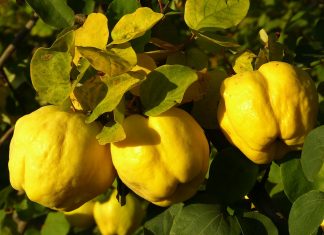
Quince: nutrition facts and health benefits
The quince is the fruit of quince, a tree of 4 to 8 meters high. It is pear shaped, very hard and corduroy. Its skin and flesh are yellow. It is impossible to eat...

Lemon: nutrition facts and health benefits
The lemon is the most common and the most used of all the lemons. It is often referred to as a "lemon" without any precise color. The lemon comes from China but we do...

Chard: nutrition facts and health benefits
The chard, bette, or Swiss chard, is a trained garden plant very large leaves smooth or dimpled, ranging from green to red wine. They have a petiole (the coast or the card) large and...

Butternut squash: nutrition facts and health benefits
It is called butternut squash evocative of its texture in the kitchen, which makes it possible to obtain particularly velvety preparations. It measures 20 to 30 cm long with a more swollen base, like...

Passion fruit: nutrition facts and health benefits
The passion fruit, a tropical berry, originates from Passiflora edulis, a climbing vine native to South America. Inside of this round and thick bark of purple or yellow fruit hides a gelatinous, tangy, sweet...

Pumpkin: nutrition facts and health benefits
The pumpkin comes from the squash family, these countless cucurbits, often mistaken for its close cousin, pumpkin. It is well rounded, always orange, with a hard peduncle, fibrous and a flesh rather stringy. The...
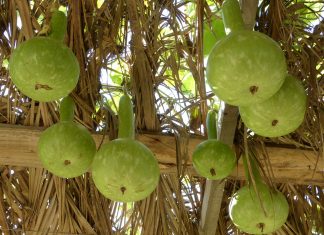
Calabash: nutrition facts and health benefits
The calabash is a cosmopolitan plant whose traces are found in Thailand, as well as in Mexico and Papua. This annual vine of the family of Cucurbitaceae produces edible calabashes, and upon drying for...