Eggplant: nutrition facts and health benefits
Icon of the Mediterranean cuisine, the eggplant is part of these chameleon foods which can be cooked in a thousand ways. The eggplant is a fruit eaten as a vegetable and has many varieties...

Rhubarb: nutrition facts and health benefits
Rhubarb is a vegetable plant with imposing leaves in the centre of a thick, fleshy rib. Only this one must be consumed, the leaves very rich in oxalic acid can be the cause of...
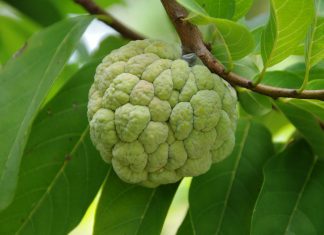
Annona: nutrition facts and health benefits
Annona is an exotic fruit in the form of a bumpy round pear. Its flesh is white and very juicy. It’s sweet and very fragrant. Its flavor reminds the taste of clove and cinnamon....

Prickly pear: nutrition facts and health benefits
Prickly pear is originally from Central America and was brought back to the Mediterranean by the Spaniards. Adapting even to the most arid climates, it quickly flourished throughout the Mediterranean basin, even spreading to...

Pumpkin: nutrition facts and health benefits
The pumpkin comes from the squash family, these countless cucurbits, often mistaken for its close cousin, pumpkin. It is well rounded, always orange, with a hard peduncle, fibrous and a flesh rather stringy. The...

Lychee: nutrition facts and health benefits
Lychee is a small fruit with a hard and rough peel, pink or red, protecting a white and fragrant flesh with delicate floral flavor. Also called "cherries of China", in reference to their origin,...

Coriander: nutrition facts and health benefits
Cilantro (Coriander) is an aromatic plant of the Apiaceae family. This spice is very common throughout the Mediterranean basin. It is cultivated everywhere and used in almost every kitchen. Its fragrance is special and...

Cherry: nutrition facts and health benefits
Cherry is the fruit of the cherry tree. It’s a small round, juicy and fleshy fruit hanging from a rod, and contains a core. It has a red intense color which varies according to...

Salsify: nutrition facts and health benefits
The salsify, as it is known with its black skin, is actually a scorzonera, a perennial plant whose root resembles the salsify on the taste plane, the skin of the latter being of ivory...

Sweet potato: nutrition facts and health benefits
If the sweet potato is not very present in Western cuisines, it has always been in those of all tropical countries. Native to Central America (where it is called "Camoe"), sweet potato, despite its...